please go to billtoole.net
 |
| A diagram of I Ching hexagrams owned by German mathematician and philosopher Gottfried Wilhelm Leibniz. It was sent to Leibniz from the French Jesuit Joachim Bouvet. The Arabic numerals written on the diagram were added by Leibniz. The grid in the center presents the hexagrams in Fuxi or binary sequence, reading across and down. The same order is used on the outside, reading up from the bottom around on the right, then up again on the left to the top.
Leibniz Archive, Niedersächsische Landesbibliothek |
 |
 |
 |
 |
 |
| 24 x 24 x 48 [ inches ] approximately | |
 |
| Freeze of warriors and horses, found by Tsountas in the Megaron; beginning of L.H. III (1400-1300 B.C.): reconstructed drawing.
Date of Creation : 1920-1923 From a series consists of 42 water-colours and ink drawings of fresco fragments and recreations discovered during the Excavation at Mycenae in the years 1920 – 1923. The majority of these frescoes were found in the Ramp House and the Palace, and some may be parts of the frescoes initially discovered by Tsountas. |
| source : BSA Mycenae Excavation Records |
 |
 |
 |
 |
 |
 |
 |
 |
 |
| asymptotic freedom ( 3 of 3 )
each panel 16 x 10 [ inches ] [ image slightly enlarged laterally to show interstitials ] ensemble 116 x 15 [ inches ] | Arches 300 gsm / watercolour / acrylic |
| done for my dearest friend Jan Andriesse |
 |
 |
 |
 |
 |
 |
 |
 |
 |
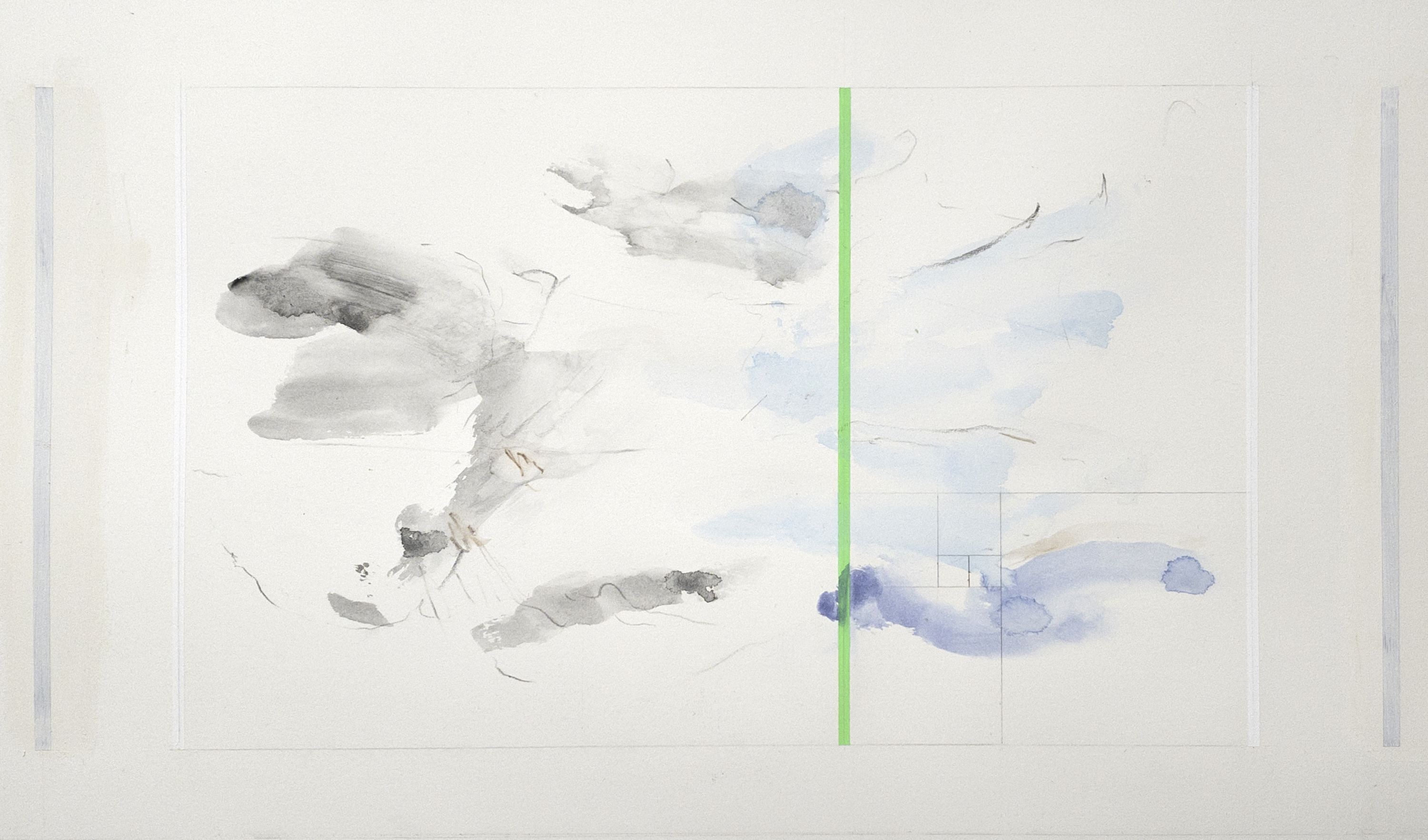
| asymptotic freedom ( 2 of 3 )
each panel 16 x 10 [ inches ] [ image slightly enlarged laterally to show interstitials ] ensemble 116 x 15 [ inches ] | Arches 300 gsm / watercolour / acrylic |
| done for my dearest friend Jan Andriesse |
 |
 |
 |
 |
 |
 |
 |
 |
 |
| asymptotic freedom ( 1 of 3 )
each panel 16 x 10 [ inches ] [ image slightly enlarged laterally to show interstitials ] ensemble 112 x 15 [ inches ] | Arches 300 gsm / watercolour / acrylic |
| done for my dearest friend Jan Andriesse |
 |
 |
 |
 |
 |
 |
| studies for asymptotic freedom 2 – each 13 1/8 x 9 5/8 [ inches ] | |
 |
 |
 |
 |
 |
 |
| studies for asymptotic freedom 3 – each 13 1/8 x 9 5/8 [ inches ] | |
| asymptotic freedom
done for my dearest friend Jan Andriesse |
|
 |
 |
 |
 |
 |
 |
| Nemertes and Apseudes – each sheet 13 1/4 x 9 [ inches ] Νημερτής | Ἀψευδὴς |
|
Abstracted from a twitter thread by Keir Giles [ @KeirGiles ]
From his book : “Moscow Rules: What Drives Russia To Confront The West” – available at: amzn.to/2SKa8ND (US) and amzn.to/2Qw9dyo (UK and Europe).
KEIR GILES’ work has appeared in a wide range of academic and military publications across Europe and in North America, and he is a regular contributor and commentator on Russian affairs for international print and broadcast media. He is a Senior Consulting Fellow at the UK’s Royal Institute of International Affairs (Chatham House), and also works with the Conflict Studies Research Centre (CSRC), a group of deep subject matter experts on Eurasian security formerly attached to the British Ministry of Defence. He is a regular contributor to research projects on Russian security issues in the U.S., UK and Europe.
Ten “Don’ts” For Dealing With Russia
1. Don’t say “they wouldn’t do that, it doesn’t make sense”.
Abandon any assumptions about what Russia might do that are based on what a Western liberal democracy would consider rational. Russia‘s decision-making framework is bounded by an entirely different understanding of history, geography, social policy and relations between countries from that of the West. To understand the choices open to Moscow, it is critically important to see the world through a Russian lens, rather than be guided by what “makes sense” in Washington or Brussels.
2. Don’t confuse understanding Russia with excusing Russia.
Russia is guided by its own distinctive sense of historical imperatives, and consequently an enduring sense of privilege to disregard commonly accepted norms of behaviour. But the conviction with which these views are expressed does not necessarily make them right, or provide an excuse when they are acted on in ways the West finds repugnant.
3. Don’t ask binary questions.
Don’t ask about Russia “is it either this or that”, “either yes or no”. The answer is likely to be both, at the same time, or neither, or more. Dealing with Russia necessitates being comfortable with paradoxes and contradictions, and many things spoken and written about Russia are both true and not true at the same time, Consequently, when you ask “why does Russia do X”. don‘t look for just one answer There will be several reasons, some of which will overlap and some of which will contradict each other.
4. Don’t be distracted by bluster, bravado and bluff.
Just because Russia makes a lot of angry noise about your plans or proposals doesn’t mean Moscow will not be prepared to live with them when they are implemented. Russia defaults to threats and feigned outrage in order to improve its negotiating position, because the West’s responses show that this sometimes works. Listen instead for changes in tone that indicate real concerns.
5. Don’t forget that Russia does not consist of just one man.
The current leader in the Kremlin at any one time is not the problem if he is driven by persistent Russian beliefs and imperatives. The country and its leaders respond to internal and external challenges in ways that remain consistent over centuries; course corrections that accompany a change of leadership tend to be temporary aberrations.
6. Don’t just hope for “change”.
Change in Russia is rarely as deep as it appears, and certainly not always for the better; so it is dangerous to assume that political change in Russia is desirable because it will necessarily be an improvement. Russia’s current behaviour towards other countries and its own citizens is reprehensible. But by historical standards, Russia is still in a period of unprecedented liberalism. It would be hard for things to get better, but it would be very easy for things to get far, far worse.
7. Don’t expect Russia to respect values and standards that were invented elsewhere.
You can’t embarrass Russia over its behaviour at times when it places no value on its reputation. “Naming and shaming” has limited effect: it is important to “name” by continuing to call attention to Russian actions and holding Moscow to account for them, but do not expect Russia to feel the “shame”. What western liberal democracies think, or believe, or would like to happen is not a deciding criterion when Russia considers which course of action to choose.
8. Don’t hope to appeal to Russia’s better nature.
Russia sees compromise and cooperation, with no evident and immediate benefit to state or leadership interests, as unnatural and deeply suspicious. This places strict limits on the potential for working with Moscow even on what may appear to be shared challenges.
9. Don’t assume that there must be common ground.
It’s natural to search for these shared challenges. assuming there must be some way we can work with Russia on mutual interests. But there is a reason this search does not bring results, despite being conducted intensively throughout the almost three decades since the end of the USSR. Whenever it appears that Russia and the West could work together on a problem, it quickly becomes clear that not only Moscow‘s understanding of the issue, but also its preferred solution and the methods it would favour to deliver it are entirely incompatible with Western norms, values and even laws.
10. Don’t think that you can choose whether to be at war with Russia or not.
Sometimes de-escalation, taken to its logical conclusion, equates to surrender. At the same time, Russia will never be “at peace” with you. Normal relations with Russia include fending off a wide range of hostile actions from Moscow; this is the default state throughout history, and Western nations should by now be realising this is the norm.
 |
| Pablo Picasso [ 1881 – 1973 ] Le Cocu Magnifique | 1968 1 of 12 etchings | text by Fernand Crommelynck plate : 221 x 322 mm [ 8¾ x 12⅝ in ] |
 |
 |
| Judy Pfaff | Fish Story, 2021 (details) steel, melted plastic, acrylic, paper lanterns, fluorescent and neon lighting | each 68” x 28” site |
|
understanding the conflict – 3 excellent sources
Kamil Galeev
Galina Starovoitova Fellow @TheWilsonCenter. MLitt in Early Modern History, St Andrews. MA in China Studies, Peking University
twitter : @kamilkazani
threadreader : https://threadreaderapp.com/user/kamilkazani
Phillips P. OBrien
Professor of Strategic Studies, University St Andrews, Author: How the War was Won, and Second Most Powerful Man in the World. Editor in Chief, War in History
twitter : @PhillipsPOBrien
threadreader : https://threadreaderapp.com/user/PhillipsPOBrien
Trent Telenko
twitter : @TrentTelenko
threadreader : https://threadreaderapp.com/user/TrentTelenko

|
| detail |
 |
| Huang Gongwang | Intimations of Rain Among Mountains and Streams | Yuan Dynasty | National Museum of China, Beijing |
Pi-fa-chi (Notes on Brush Method)
| The six essentials for landscape painting, according to the sage, are :
氣 Ch’i (life breath): 韻 Yün (resonance and elegance): 思 Si (thought): 景 Jing (scenery): 筆 Bi (brushwork): 墨 Mo (ink wash): |
 |
| Wintry Forests and Layered Banks Hanging scroll on silk, attributed to Dong Yuan 董源 [ c. 934 – 962 ] Kurokawa Foundation | Hyogo | Japan |
